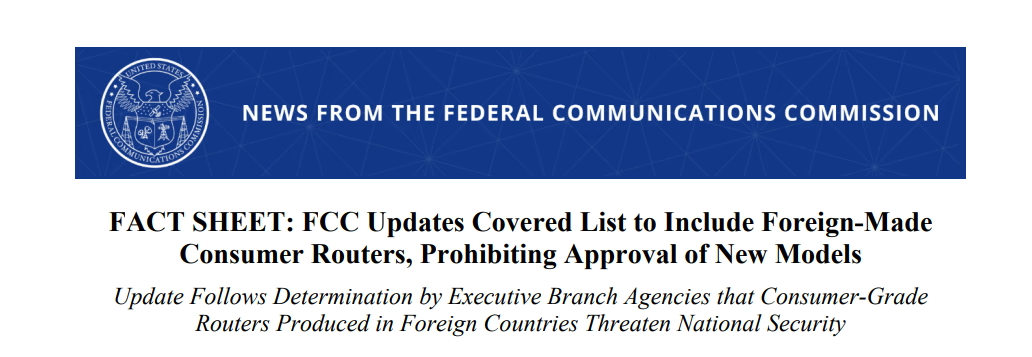
A few days ago, the FCC banned sales of new consumer Wi-Fi routers manufactured outside the U.S. on the premise of national security.
I’m anticipating this will mainly target TP-Link, based on it being a Chinese company, it having a large U.S. market share of consumer routers, and because network equipment from Chinese giants Huawei and ZTE was previously banned.
I think this action is overreach because the FCC could have cooperated with the router companies to audit their firmware and require them to provide patches for and disclose CVEs (Critical Vulnerabilities & Exposures) discovered. Also, cheaper/low-end Wi-Fi routers can have as few as 2-3 years of security updates starting from the point of their original release date; in my opinion, the FCC should work with the router companies or at least force them to provide security updates for 5-10 years, not only for national security, but also to reduce e-waste.
In terms of supply chain, none of the key components inside a router (SOC, RAM, Flash Storage, Wi-Fi chip/card) are currently made or will be likely made in the U.S. largely because factors such as manufacturing costs, labor force with the right skill-sets, and relatively low retail value of the products.
If TP-Link gets banned permanently, it will be mainly just Netgear, Amazon, and Google, and Asus left in the U.S. market; Amazon and Google, as of this writing, are multi-trillion dollar companies in terms of market capitalization/value, and they don’t need any more money being siphoned towards them.